See everything connected to a health system or provider group
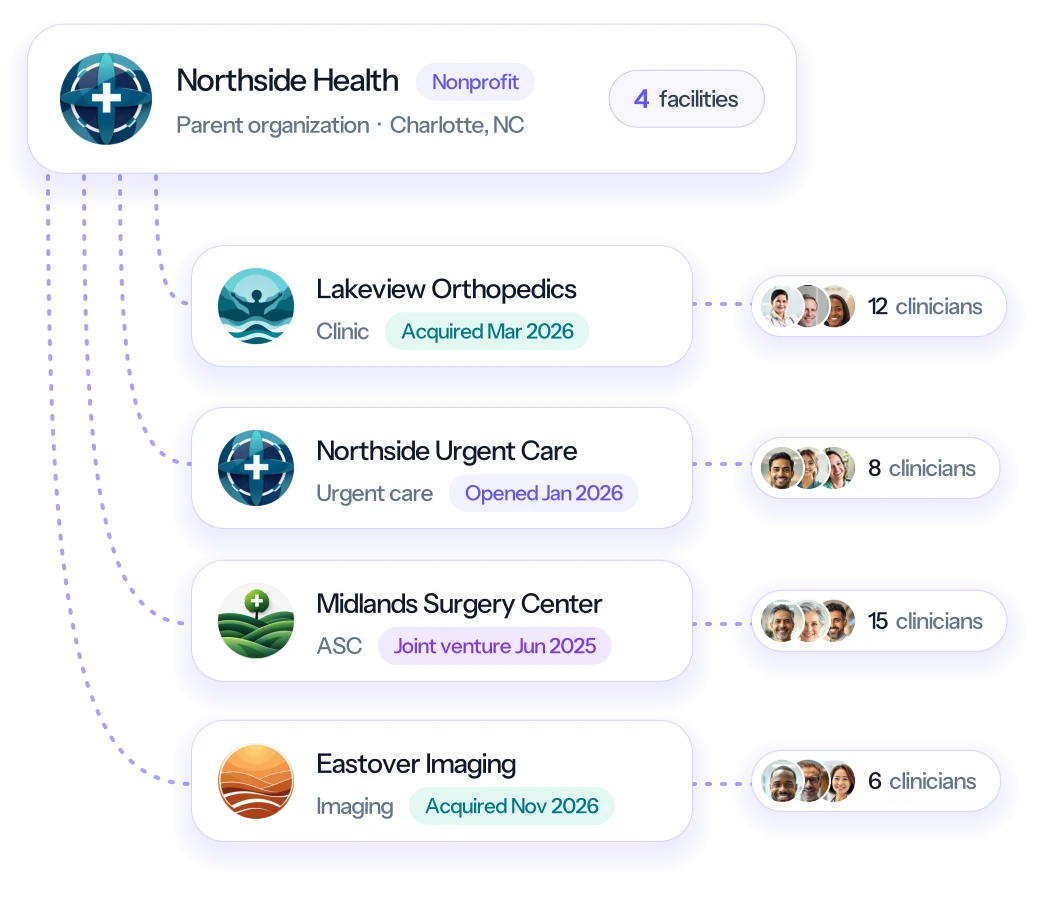
Provider organizations are complex. Facilities, locations and affiliations are hard to untangle, and they keep changing. IDN Intelligence maps every parent organization and group TIN to its facilities and the physicians who work there. It tracks acquisitions, closures and relocations, so contracts and rosters stay current and members can find care their plan covers.







Built on Physician 360 and Facility 360
IDN Intelligence is affiliation and ownership data for health systems and provider groups. It connects Candor Health's provider and facility profiles to the parent organization and group TIN they belong to.
One clear view of each health system
-
Every Facility. Hospitals, ASCs, urgent care, imaging, labs, and group practices together, not spread across separate tools.
-
Every Provider. The clinicians connected to the system, by specialty.
-
Every Change. Every acquisition, divestiture, and closure, with what changed and when.
Network Management
-
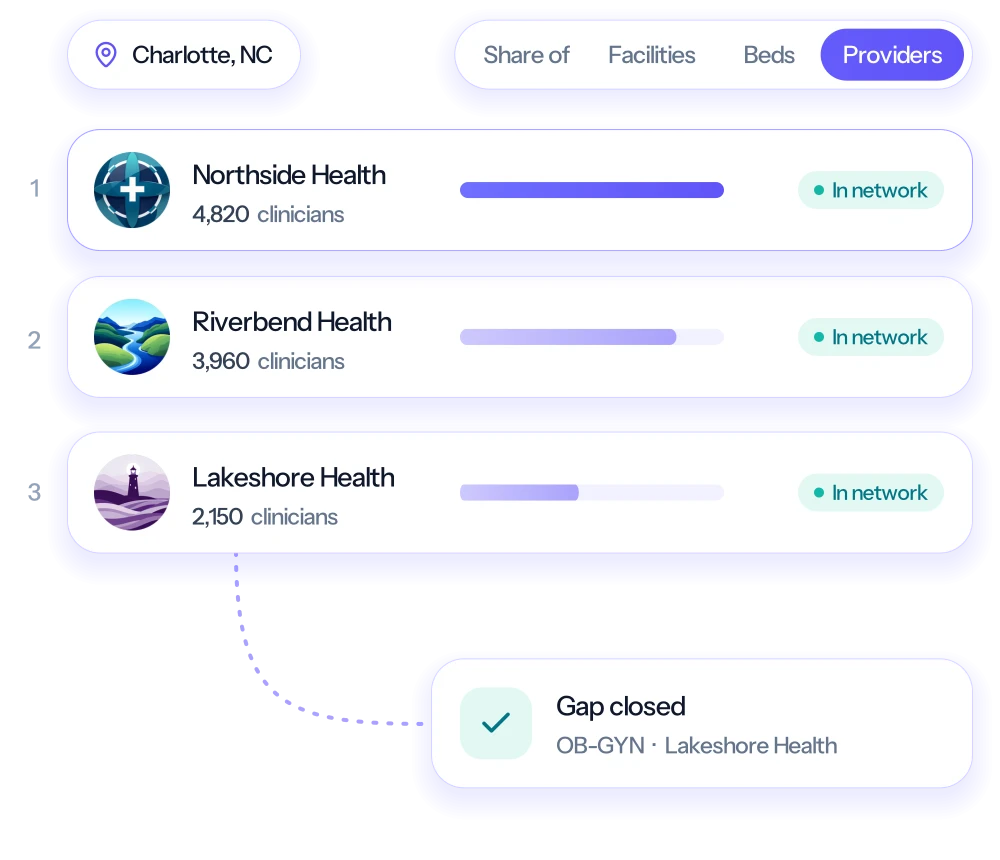
Negotiate with confidence. Know what's connected to each system and when acquisitions affect contracts.
-
Close network gaps. Identify systems that address multiple adequacy needs.
-
Market share. Compare systems in a market by share of facilities, beds and providers, and the procedures they perform most.
What IDN Intelligence includes
Health system affiliation and ownership data, built on Physician 360 and Facility 360 profiles.
Parent organizations and group TINs
Every parent organization and group TIN, mapped to the facilities and physicians that belong to it.
Facilities
Hospitals, ASCs, urgent care, imaging, labs and group practices together, not spread across separate tools.
Physicians by specialty
The clinicians connected to each health system, by specialty.
Ownership changes
Acquisitions, divestitures, mergers, closures and relocations, with what changed and when.
TINs, NPIs and brands
Billing entities and acquired brands linked to their parent system.
Market share
Systems in a market compared by share of facilities, beds and providers, and the procedures they perform most.
Related terms: provider affiliation, tax identification number (TIN), national provider identifier (NPI), network adequacy, care navigation and provider roster.
Built for the teams that guide members and the teams that keep the data right
Care navigation teams use IDN Intelligence to find independent, lower-cost sites of care. Data operations teams use it to link TINs and NPIs to the parent health system and keep rosters matched.
Care Navigation
Guide members to care their plan covers.
-
Find lower-cost care.
Identify independent labs, imaging centers, and urgent care.
-
Support member preferences.
Guide members to systems and specialty centers they trust.
-
Keep care connected.
Help members stay within one system for coordinated care.
Data Operations
Keep rosters matched to each system.
-
Find missing providers.
Compare rosters with system footprints to uncover network gaps.
-
Connect TINs and NPIs.
Link billing entities and acquired brands to their parent system.
-
See every clinician.
View providers across a health system by specialty.
FAQ
IDN Intelligence questions
Short answers on health system affiliation data: what IDN Intelligence covers, how it tracks acquisitions, and which teams use it.
-
IDN Intelligence is a Candor Health product that maps every parent organization and group TIN to its facilities and the physicians who work there. It tracks acquisitions, closures and relocations, so contracts and rosters stay current and members can find care their plan covers.
-
IDN Intelligence covers 300+ health systems and provider groups, links 600,000 Physician 360 profiles to them and has captured 1,500+ acquisitions, divestitures and mergers.
-
IDN Intelligence is built on Physician 360 and Facility 360. It connects those provider and facility profiles to the parent organization and group TIN they belong to, so you see hospitals, ASCs, urgent care, imaging, labs and group practices together, not spread across separate tools.
-
Care navigation teams use it to find lower-cost care and keep members within one system. Network management teams use it to negotiate contracts, close network gaps and compare market share. Data operations teams use it to find missing providers and connect TINs and NPIs to their parent system.
-
Hospitals, ASCs, urgent care, imaging, labs and group practices. IDN Intelligence shows them together under the health system or provider group they belong to, not spread across separate tools.
-
Yes. IDN Intelligence records every acquisition, divestiture and closure, with what changed and when, and it tracks relocations. It has captured 1,500+ acquisitions, divestitures and mergers.
-
Yes. IDN Intelligence maps every parent organization and group TIN to its facilities and the physicians who work there, and links billing entities and acquired brands to their parent system.
-
Network management teams see what is connected to each health system and when acquisitions affect contracts. They can identify systems that address multiple adequacy needs, and compare systems in a market by share of facilities, beds and providers and the procedures they perform most.
-
Care navigation teams use it to identify independent labs, imaging centers and urgent care, to guide members to systems and specialty centers they trust, and to help members stay within one system for coordinated care.
-
Data operations teams compare rosters with system footprints to find missing providers, and view providers across a health system by specialty.
Request a demo
Stay in sync as it changes.