Building Inclusive Healthcare for LGBTQ Communities
For many LGBTQ individuals, finding healthcare is not simply about locating the nearest provider. It often involves determining whether care will feel safe, respectful, and affirming before an appointment is ever scheduled.
Yet most provider search experiences offer very little visibility into that reality.
Discriminatory laws, culturally incompetent providers, and gaps in provider directory data continue to create significant barriers to equitable healthcare access for LGBTQ communities. The result is not only delayed care, but measurable downstream health consequences.
Research consistently shows that LGBTQ individuals are more likely than their peers to delay medical care due to fears of discrimination — a pattern directly linked to worsening health outcomes and reduced continuity of care.

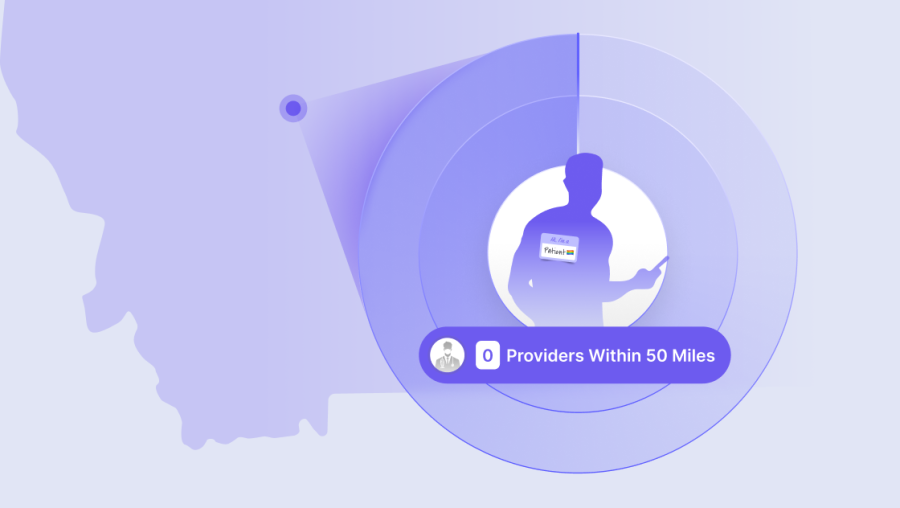
- 1 LGBTQ individuals are more likely than their peers to delay medical care due to fears of discrimination — a pattern that directly worsens health outcomes.
- 2 Most online provider directories do not indicate whether a clinician is LGBTQ-affirming, making it difficult for patients to identify safe, competent care.
- 3 State legislation creates sharp geographic disparities in care access, with protective laws in some states contrasting with restrictive or discriminatory policies in others.
- 4 LGBTQ youth are four times more likely than their peers to consider suicide; 39% reported serious consideration in the past year.
- 5 Inclusive healthcare environments are associated with greater preventive care utilization and improved continuity of care.
The Access Gap Starts with Provider Directories
Finding LGBTQ-affirming providers is harder than it should be. Most online provider directories don't include any indication of whether a clinician is LGBTQ-friendly — leaving patients to navigate uncertainty before they ever schedule an appointment.
That gap has real consequences. Studies indicate that LGBTQ individuals are more likely than their peers to delay medical attention due to fears of discrimination. The shortage of providers with LGBTQ-specific competency reinforces that avoidance, creating a cycle where negative or anticipated negative experiences reduce care-seeking behavior over time.
Legislative Impacts on Care Accessibility
State legislation significantly shapes both the availability of care and how safely LGBTQ individuals can access healthcare services.
States like California and Colorado have implemented stronger non-discrimination protections that help create more supportive healthcare environments for LGBTQ patients. Six states have also enacted protections for families seeking gender-affirming care for their children, while others have introduced legislation connecting reproductive rights protections with broader transgender healthcare access.
In contrast, states including Florida, Mississippi, and Tennessee have enacted laws that permit discrimination in certain healthcare settings or restrict access to gender-affirming care.
Researchers and advocacy organizations continue to track a sustained increase in legislation affecting LGBTQ healthcare access, education, and public services. As a result, healthcare access and patient experience can vary dramatically depending on geography.
For many LGBTQ patients, the challenge is not whether affirming providers exist — it’s whether healthcare systems make those providers realistically discoverable and accessible.
Health Disparities in LGBTQ Communities
The long-term effects of discrimination, delayed care, and inconsistent access are reflected across nearly every major area of LGBTQ health outcomes.
Mental health disparities remain particularly severe. LGBTQ individuals, especially youth, report significantly higher rates of anxiety, depression, and suicidal ideation than the general population. Studies show that LGBTQ youth are four times more likely than their peers to consider suicide, while 39% of LGBTQ youth and 46% of transgender and nonbinary youth reported seriously considering suicide within the past year.
Substance use disparities also remain elevated across LGBTQ populations. National surveys found that 26% of LGBTQ students reported recent alcohol use, 25% reported marijuana use, and 18% reported misusing prescription opioids — rates that exceed those reported within the broader student population.
Chronic illness risk is higher as well. LGBTQ individuals experience elevated rates of cardiovascular disease and certain cancers, with contributing factors that include chronic stress, delayed treatment, inconsistent preventive screenings, and fear of mistreatment within healthcare environments.
How Provider Directory Data Can Close the Gap
Research is consistent: inclusive healthcare environments lead to greater preventive care utilization, stronger patient-provider relationships, and better follow-up rates. The challenge is connecting LGBTQ patients to those environments before a negative experience discourages them from trying.
Candor Health's platform helps organizations address this gap directly. An LGBTQ+-affirming indicator in the provider directory allows patients to identify clinicians who will provide respectful, competent care — before the appointment, not after the fact.
Candor has identified more than 10,000 affirming providers — including physicians, nurses, and behavioral health specialists — surfaced within the directory experience to support continuity of care and build patient trust from the first search.
Not all providers are LGBTQ-friendly. But the ones who are should be easy to find. Contact us to learn more or request a demo.
Standardize provider roster ingestion, reduce reconciliation overhead, and improve provider directory reliability with Candor Health.

More Posts
Provider Data Accuracy Without Compromising Network Adequacy

Four Takeaways for Smarter Provider Data Systems